The Cammino Via Flavia
A journey to discover cities, territories, waters, and millennial histories at the northernmost point of the Mediterranean
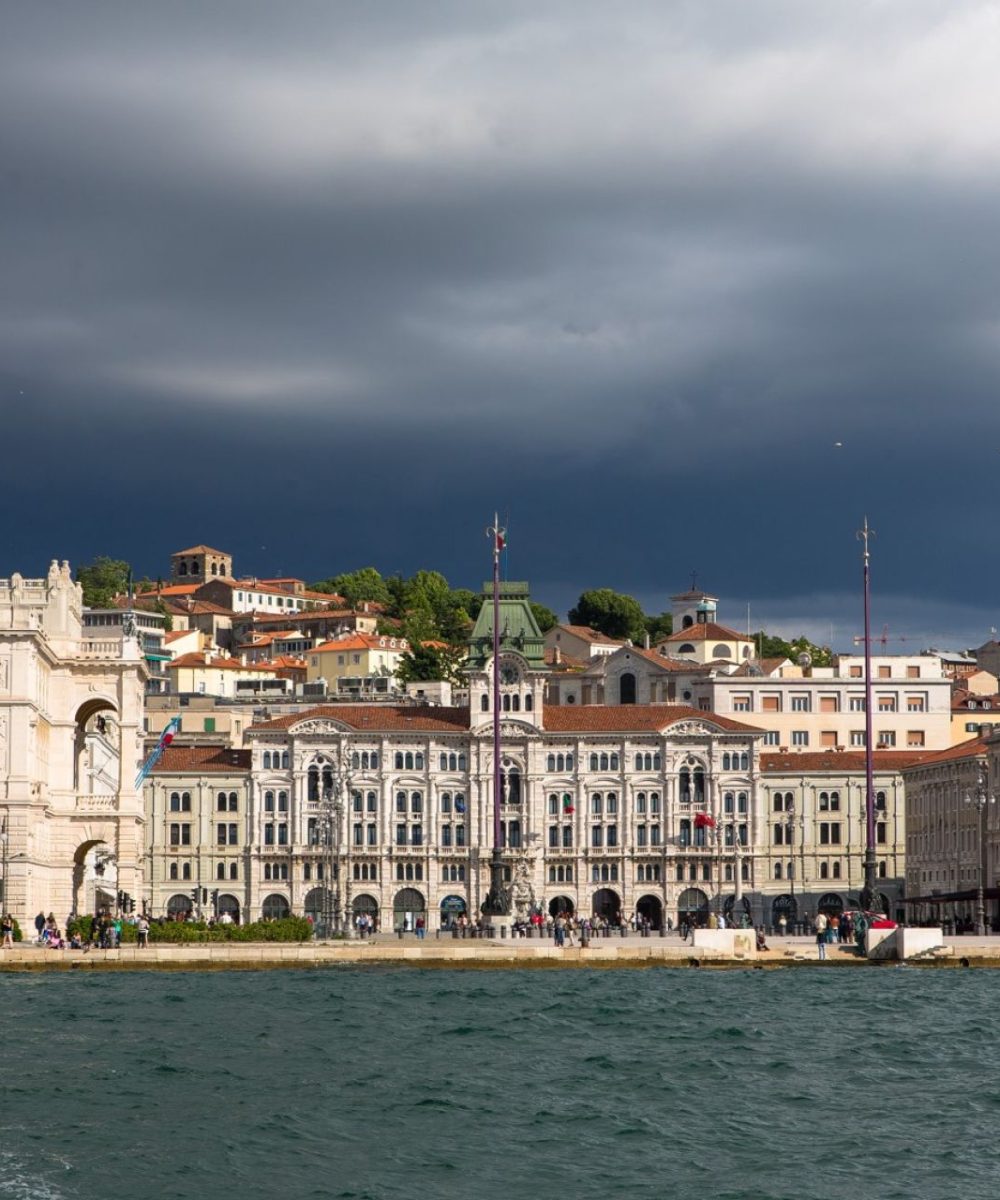
The Via Flavia is a 116 km long route divided into five stages between Venezia Giulia and Friuli, where, on white limestone cliffs and fine golden sands, Europe plunges into the northernmost point of the Mediterranean. Those who mapped out the route a few years ago drew inspiration from the ancient Roman Via Flavia, which led from Trieste to Istria. They used the powerful evocative power of the name of this road to identify a route that would somehow connect these places so steeped in antiquity, culture, and biodiversity, to give today’s travelers the charm of walking through history.
A historical journey
From the Roman colony of Aquileia, founded in 181 BC, a series of roads led to Istria, Dalmatia, and the Danube. The Roman Via Flavia was the road connecting Trieste (Tergeste) and Pula (Pietas Iulia), crossing the entire Istrian peninsula.
A natural journey
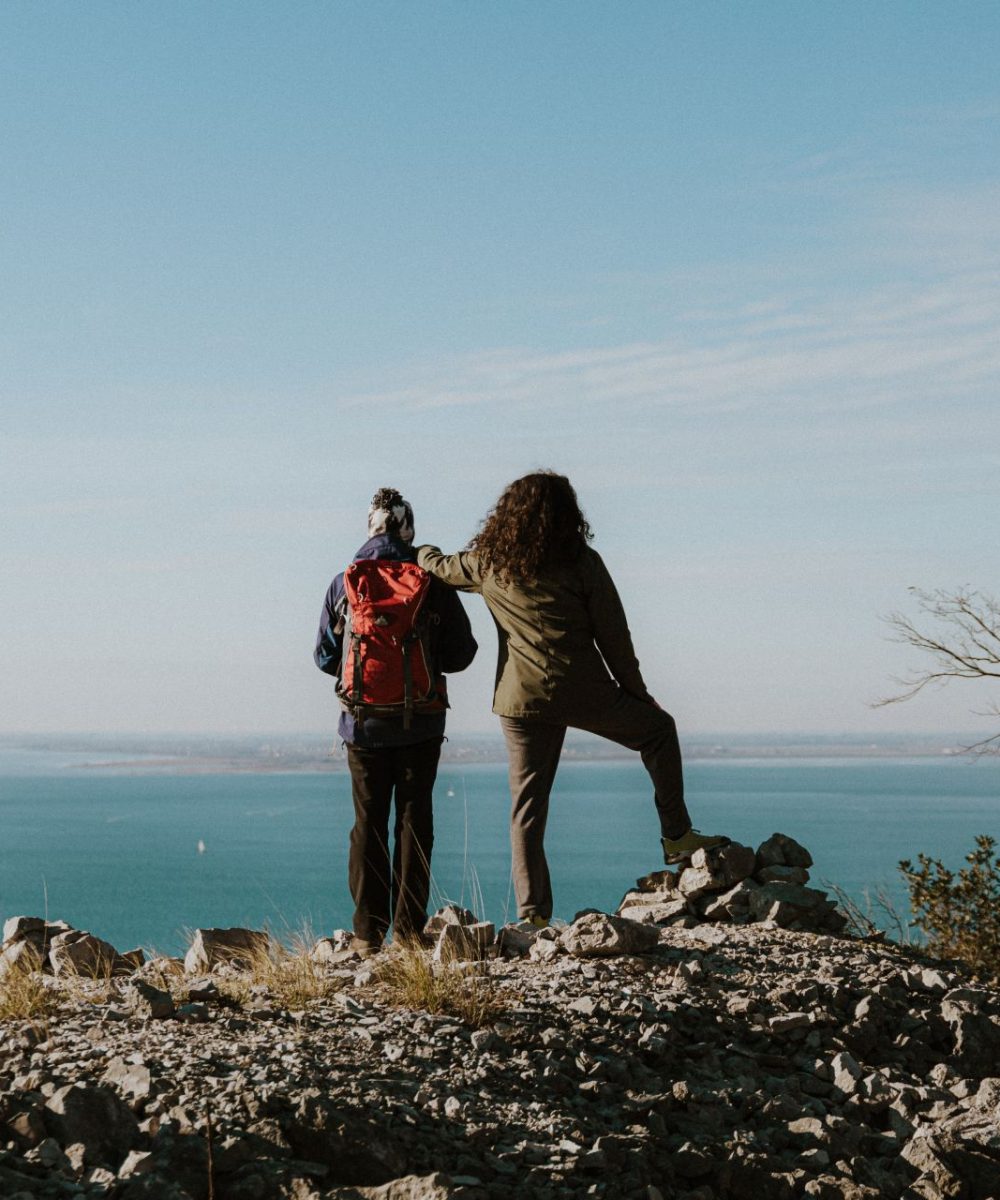
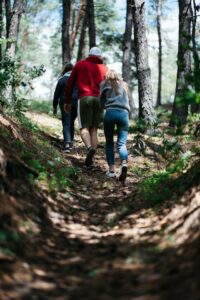
The Via Flavia allows you to discover a varied and fascinating landscape of hills, mountains, woods, farmland, rocks, caves, coastlines, beaches, bays, lagoons, and fresh and salt water. You can admire breathtaking views and encounter a variety of fauna and flora, often protected in reserves, biotopes, and natural geosites.
A cultural journey
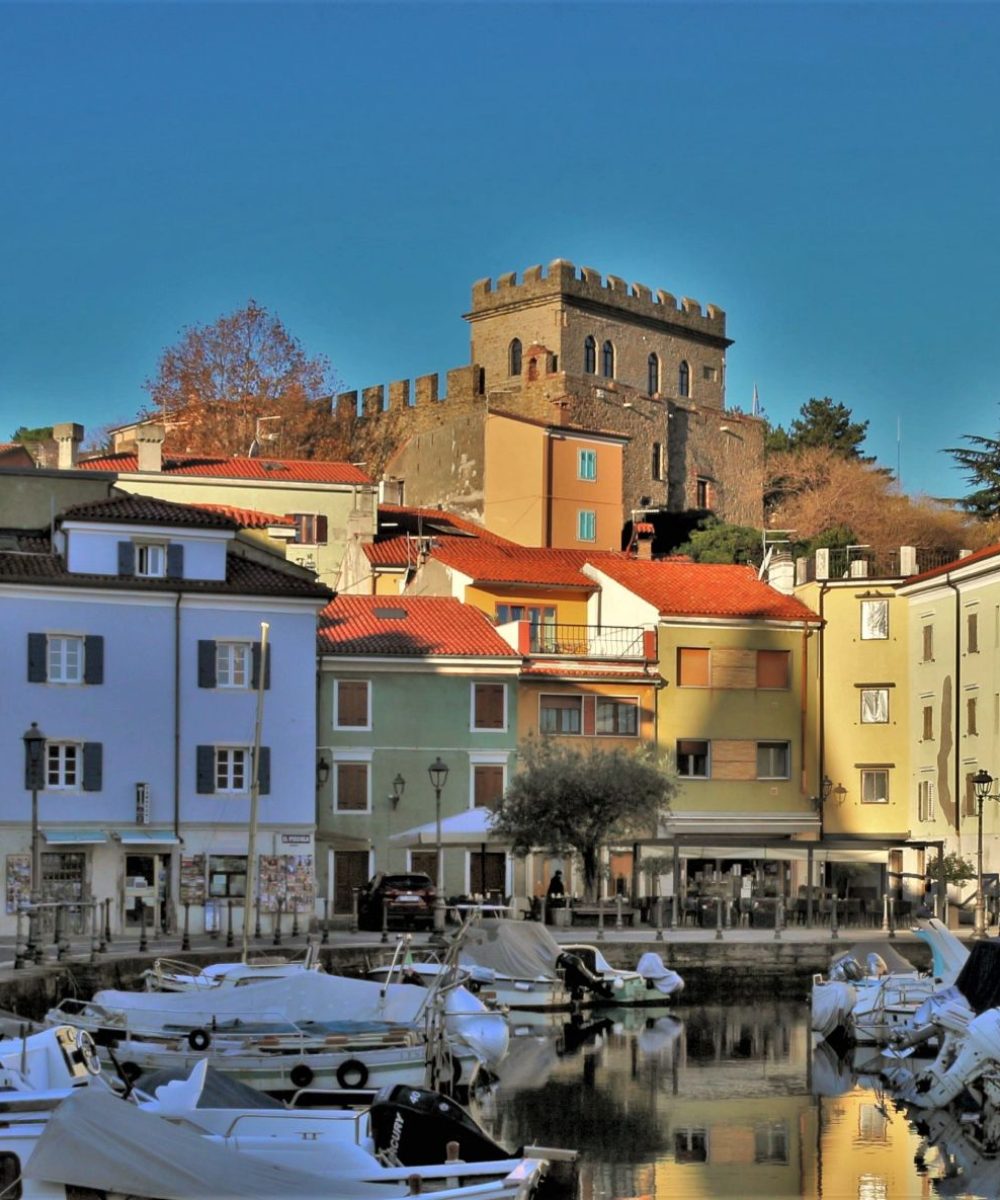
The Via Flavia passes through numerous towns and villages in an area that has always been a link between the Latin, Slavic, and Central European worlds. Each location offers a wide range of historical, architectural, social, and multicultural insights that make the journey always different.
A religious journey
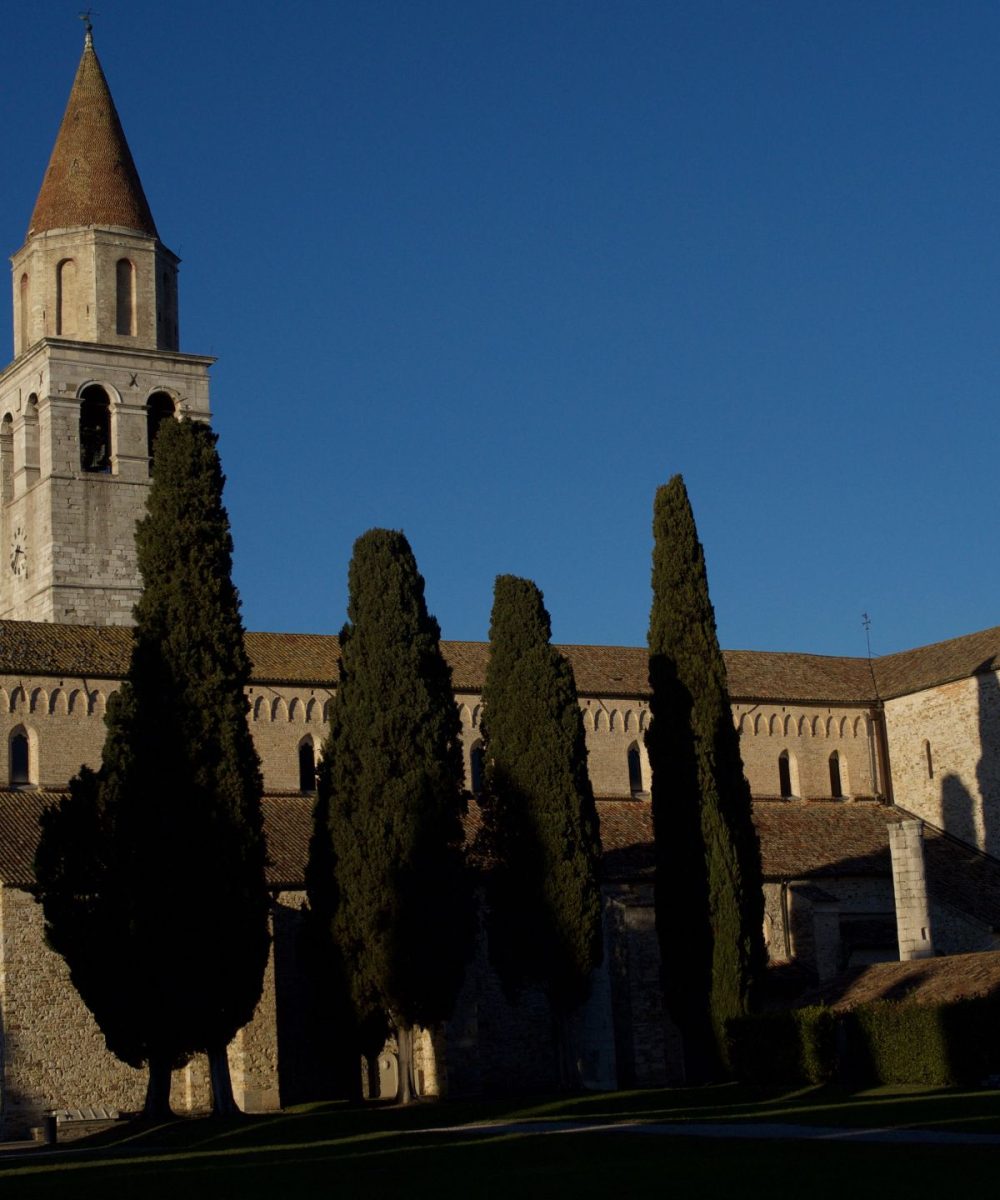
Sanctuaries, basilicas, churches, and votive shrines, even those of different religions, enrich a journey that already has a strong spiritual significance in the name of Aquileia and its Patriarchate: a transregional stronghold of evangelization that for centuries has united, shaped, and blended lands and peoples of different origins and languages.
THE STAGES OF THE CAMMINO
Discover all the details, information, and special features of the stages of the route.
1
Stage no. 1
20,4 km
First stage
The departure point is on the seafront at Lazzaretto, a few meters from the Slovenian border, on the edge of the Bay of San Bartolomeo, which preserves Roman ruins and was once a point of embarkation for pilgrims traveling to the Holy Land.
2
Stage no. 2
20 km
Second stage
From the center of Bagnoli della Rosandra/Boljunec, climb up into the Breg Valley, partly cultivated with vines, olive trees, and a few vegetable gardens, to reach the village of Sant'Antonio in Bosco/Boršt and the route of the old Val Rosandra railway, now the Cottur cycle path connecting Trieste to Hrpelje, where you turn left towards Trieste.
3
Stage no. 3
26/33,1 km
Third Stage
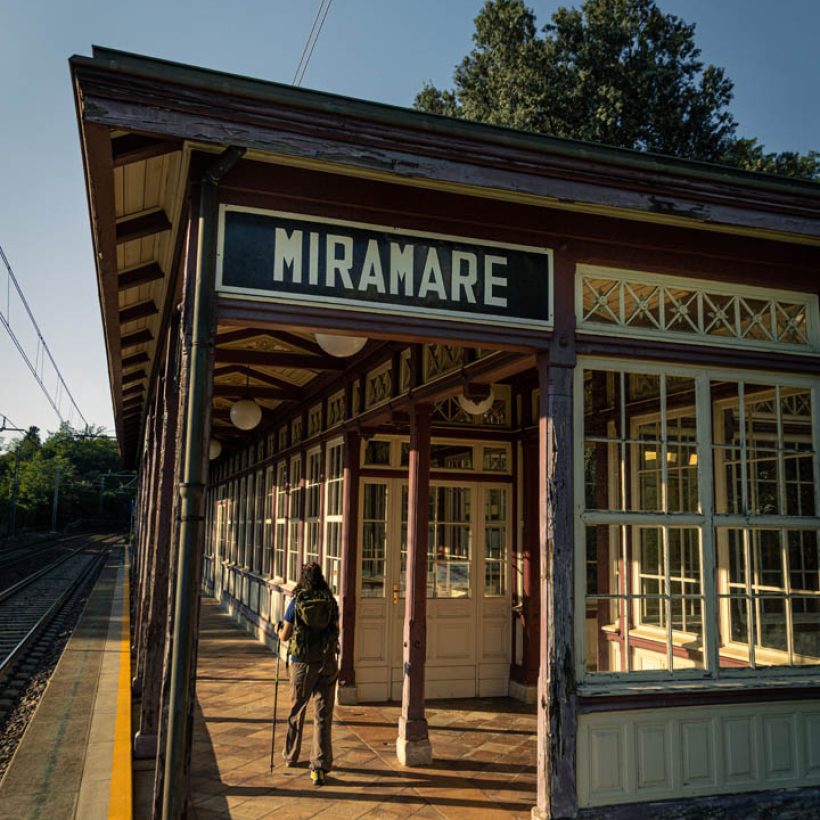
From the upper exit of the park, you reach the Miramare railway station and climb a staircase to reach Via Plinio, where you turn left (from here, another staircase leads to the HIGH VARIANT). Continue straight ahead and, after passing a crossroads, continue along the road beside the railway line, passing stately villas and terraces planted with vines or olive trees.
4
Stage no.4
27,7 km
Fourth stage
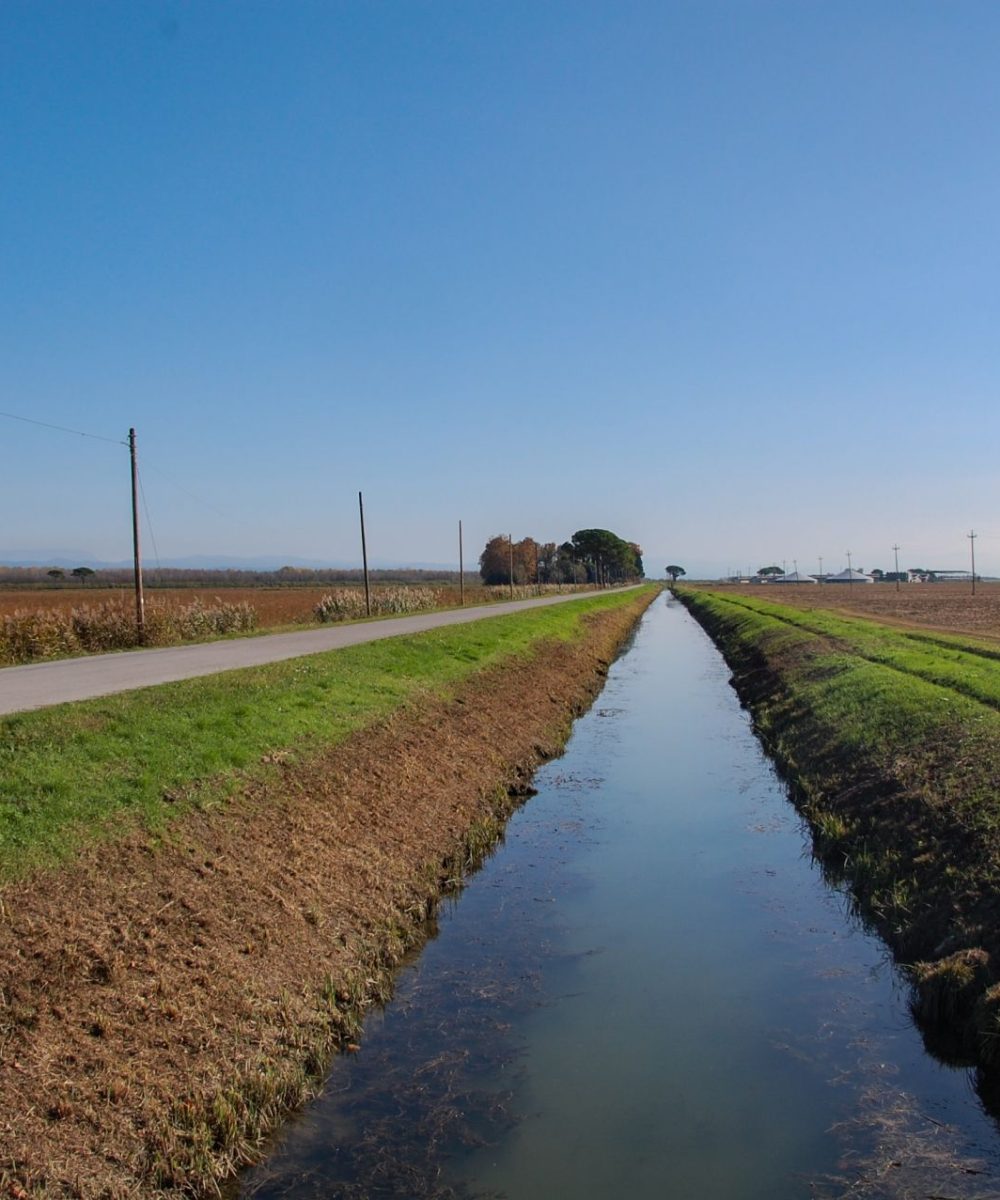
Leaving the town behind and reaching the northernmost point of the Mediterranean, the landscape changes completely: you leave the karst area behind and find yourself immersed in a coastal environment, largely marshy, in an area that underwent intensive reclamation in the last century and offers many points of interest from a naturalistic point of view, including biotopes and geosites.
5
Stage no. 5
21,2 km
Fifth Stage
Leaving Val Cavanata, continue along the cycle/pedestrian path towards Luseo, Tenuta Primero, and Punta Spin, where you enter Bosco La Rotta, a small remnant of the first coastal reforestation projects at the end of the 19th century, to reach Grado Pineta on the coast, where you have two options for continuing towards the important tourist and spa center of Grado.
PHOTOS AND MEDIA GALLERY
Discover some photos taken by those who have traveled the route. This section is constantly being updated.
WHAT PEOPLE SAY ABOUT THE CAMMINO
Some thoughts, impressions, and memories from those who have already traveled the route
Hiker
“Water is the thread that connects the past to the present, the sea to the land, nature to culture.”
Hiker
“The Via Flavia is a journey through time and space, between ancient Roman ruins and the modern challenges of multi-ethnicity."
Hiker
“The cuisine of the Upper Adriatic is an explosion of flavors and diversity, blending the traditions of the Adriatic and Central Europe.”
Hiker
“Walking through history means discovering the infinite frontiers that unite and divide us.”